Creating a productive home workspace environment can make a significant difference in your daily work routine. Whether you work remotely full-time or occasionally, the right setup helps you stay focused, comfortable, and motivated. With so many distractions around the house, it’s essential to design a space that supports your work habits and promotes efficiency.
In this post, we’ll cover practical tips to build an effective home workspace, discussing everything from layout and lighting to organisation and ergonomics.
Choose the Right Location
Find a Quiet, Dedicated Space
The first step is selecting a spot that minimises distractions. Ideally, you want a room or corner away from household noise, traffic, or areas with heavy footfall. If you live with others, communicate your work hours to help maintain a quiet environment.
Separate Work and Leisure Areas
Try to create a clear boundary between your workspace and relaxation zones. This separation makes it easier to switch on your “work mode” and prevents your workspace from becoming cluttered with non-work items.
Invest in Ergonomic Furniture
Comfortable Chair and Desk
A supportive chair with adjustable height and good lumbar support helps prevent back pain during long work hours. Pair this with a desk at an appropriate height so your forearms can rest comfortably while typing. Ergonomics can improve both posture and overall wellbeing.
Position Your Monitor Correctly
Place your computer screen at eye level, about an arm’s length away, to reduce neck and eye strain. If needed, invest in an adjustable monitor stand or use books to raise your screen.
Optimise Lighting Conditions
Maximise Natural Light
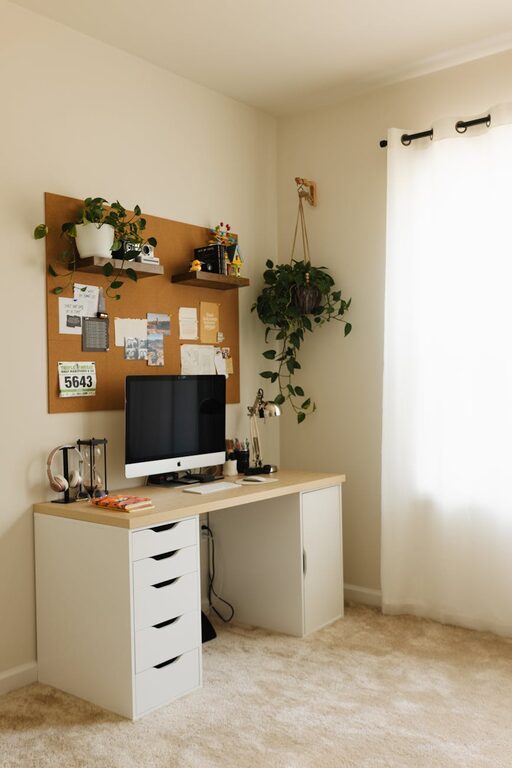
Natural daylight boosts mood and alertness. Position your desk near a window, but avoid direct glare on your screen. Use light, airy curtains to soften sunlight without darkening the room.
Add Task Lighting
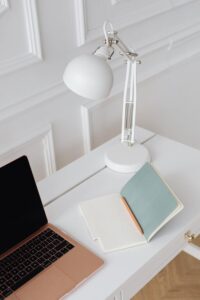
When natural light is insufficient, a desk lamp with adjustable brightness ensures your workspace remains well-lit during darker hours. Opt for bulbs with a daylight or soft white colour temperature for a pleasant working atmosphere.
Keep Your Workspace Organised
Declutter Regularly
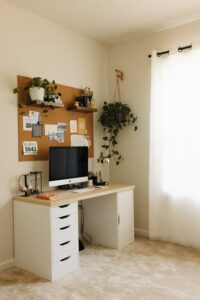
A tidy workspace reduces distractions and mental fatigue. Use storage solutions like shelves, drawers, and organisers to store documents and stationery neatly.
Use Cable Management
Keep cables organised and out of sight with clips, ties, or a cable box. This not only looks neater but also prevents tangling that can cause frustration.
Minimise Distractions
Set Boundaries
Communicate your work hours and workspace rules with family or housemates to limit interruptions. Consider putting up a polite sign on your door if needed.
Limit Digital Distractions
Turn off non-essential notifications and use apps that help you focus by blocking distracting websites for set periods.
Personalise Your Space Thoughtfully
Add Plants
Indoor plants can reduce stress and improve air quality. Choose low-maintenance varieties that thrive indoors, such as snake plants or succulents.
Include Inspiring Elements
Personal touches like artwork, photos, or motivational quotes can boost your mood. Keep décor simple and relevant to avoid clutter.
Maintain Healthy Habits
Take Regular Breaks
Avoid sitting continuously for hours. Stand up, stretch, or take a short walk every hour to boost circulation and reduce fatigue.
Stay Hydrated and Eat Well
Keep a water bottle at your desk and plan healthy snacks to maintain energy levels throughout the day.
Test and Adjust Your Setup
Everyone’s ideal workspace varies. After setting up, spend a few days observing what works and what doesn’t. Make adjustments as necessary — from changing chair height to repositioning your monitor or experimenting with lighting.
—
Creating a productive home workspace takes some planning but pays off with improved focus, comfort, and efficiency. By choosing the right location, investing in ergonomic furniture, and keeping distractions to a minimum, you’ll find your remote workdays becoming more enjoyable and effective. Remember, the key is to create a space that suits your personal work style and supports your wellbeing.