Creating a home office that is both cosy and functional can make a significant difference to your working day. Whether you work from home full-time or just occasionally need a space to focus, having a dedicated area that suits your needs and personal style helps improve productivity and wellbeing. This guide offers practical suggestions for designing a home office that balances comfort and efficiency.
Choose the Right Location
Selecting the ideal spot for your home office is the first step. Look for a quiet area with minimal distractions and enough space to accommodate your work essentials. If possible, use a room with a door so you can separate work from home life. If space is limited, consider a corner of your living room or bedroom but try to establish clear boundaries with room dividers or curtains.
Consider Natural Light
Natural light is excellent for both mood and focus. Position your desk near a window to benefit from daylight, but avoid direct glare on your computer screen. Use sheer curtains or blinds to control light levels throughout the day.
Invest in Comfortable Furniture
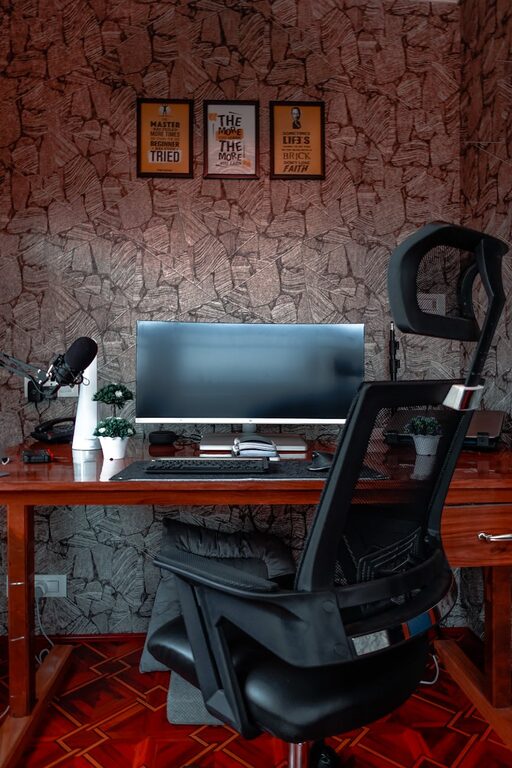
Comfort is key when you spend long hours working. A supportive ergonomic chair helps maintain good posture and avoids back pain. Your desk should be the right height—generally around 70-75 cm—to ensure your arms rest comfortably when typing.
Desk and Storage Solutions
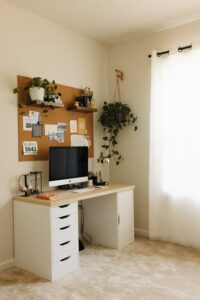
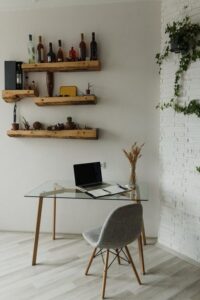
Choose a desk with enough surface area for your computer, notebooks, and any other essential tools. If space allows, consider an adjustable desk to alternate between sitting and standing positions. Efficient storage, such as shelving units, drawers or filing cabinets, helps keep your workspace clutter-free.
Personalise Your Space
Adding personal touches can make your office more inviting and help you feel motivated. Choose colours and decor that make you happy and relaxed. Soft furnishings like cushions, rugs, and curtains add warmth to your workstation.
Greenery
Indoor plants not only brighten the space but also improve air quality and reduce stress. Small low-maintenance plants like succulents or spider plants are perfect for home offices.
Optimise Lighting
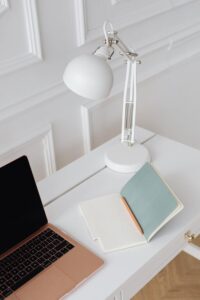
Besides natural light, proper artificial lighting is essential to reduce eye strain. A good desk lamp with adjustable brightness allows you to work comfortably during darker hours. Consider warm-toned bulbs for a cosy atmosphere.
Maintain Organisation
A tidy workspace encourages clear thinking and efficiency. Use organisers, trays and cable management solutions to keep items in order. Regularly declutter your desk and digital files to avoid distractions.
Minimise Noise and Distractions
If you don’t have a separate room, noise can be an issue. Use noise-cancelling headphones or softly playing background music to stay focused. Consider soundproofing options like rugs, cushions, or wall panels to absorb noise.
Manage Technology
Ensure your technology setup suits your needs and doesn’t create frustration. Position your monitor at eye level for neck comfort. Use a docking station or cable clips to manage cords neatly. Keep chargers and frequently used devices within reach but off the main workspace.
Add Comfort Features
Small comfort elements can improve your work experience:
– A cosy throw or blanket for chilly days.
– A water bottle or coffee mug within easy reach.
– A small fan or heater to regulate temperature.
– A bulletin board or whiteboard for planning and inspiration.
Set Boundaries to Improve Work-Life Balance
Clearly define your working hours and avoid working in spaces associated with relaxation if possible. When your workday ends, organise your desk to mark the transition from work to leisure.
Final Thoughts
Creating a home office that is both cosy and functional doesn’t require a large budget or space. Focus on comfort, organisation, and personal touches to build a workspace that supports your productivity and wellbeing. With a little planning and creativity, your home office can become your favourite room in the house.